Boosting Mental Health Access Through Collective Action
Like all good ideas, the Boost! Program began by identifying a problem that needed solving. And like all innovative solutions, success was the result of dedicated people working together.
In 2022, the Virginia Health Care Foundation (VHCF) conducted the Assessment of the Capacity of Virginia’s Licensed Behavioral Health Workforce, which identified a significant shortage of licensed therapists in Virginia. The report found that not only are there insufficient numbers of needed behavioral health professionals, but the race and ethnicity of those practicing is not proportionate to the population of Virginia. In addition, many are nearing retirement age and the pipeline to replace them is inadequate.
One significant barrier faced by many who want to become a Licensed Clinical Social Worker (LCSW), Licensed Professional Counselor (LPC), or Licensed Marriage and Family Therapist (LMFT) is the financial cost of the clinical supervision hours required for licensure.
“We have found that the cost of supervision to become licensed is a significant barrier,” Trinette Randolph, the Boost! Program Manager at VHCF said. “It can cost thousands of dollars and many students are just completing a Master's program with high student loan debt and can't afford to cover these costs.”
Regulations require that Counselors and Social Workers work under supervision for at least 21 and 24 months, respectively. While some employers cover the cost of supervision, many do not—and for many aspiring therapists, the out-of-pocket expenses are simply unaffordable. Along with their supervision hours, Counselors and Social Workers must also complete 3,400 and 3,000 clinical hours, respectively.
VHCF’s solution was both straightforward and transformative: remove the barrier by paying for the required supervision of those seeking licensure.
This idea would eventually spawn the Boost! Program.
Around the same time, two leaders accepted new roles in the Richmond area; leaders that would get the ball rolling on what would become a regionwide effort.
In 2023, Susan Davenport began serving as Chair of the Board of Jenkins Foundation, a local foundation dedicated to pursuing opportunities to help expand access to high-quality, community-based health services. Reginald Gordon, meanwhile, had joined Richmond Memorial Health Foundation (RMHF) as their President and CEO.
“We wanted to build up our engagement and form relationships,” Davenport said. “RMHF had always been helpful to Jenkins, and we thought it was a great opportunity to reach out to Reggie to start a conversation.”
Gordon remembered the initial outreach from Davenport well.
“We held a series of meetings with Susan and the Jenkins Foundation,” Gordon recalled. “And we decided pretty quickly that we needed to expand the group and bring in more funders who might be dealing with things like the social determinants of health.”
The Jenkins Foundation and RMHF convened regularly and brought more funders on board, which was eventually formalized as the RVA Health and Racial/Ethnic Equity Funders Group.
When Davenport pitched the idea of speaking with VHCF’s then-Executive Director Deborah Oswalt to learn more about emerging issues, Gordon readily agreed. That January, Oswalt presented on a variety of topics to the group of funders, including best practices in the mental health space, recent data, and the Boost! pilot.
Both Gordon and Davenport were immediately interested in Boost! and the ongoing effort to help students cover the cost of their supervision.
“I felt that this pilot program fit squarely into the RMHF mission,” Gordon said. “A funder had identified a specific problem that was causing inequity in the system and limiting the number of people who could get credentialed to serve. That’s what we should put our money behind."
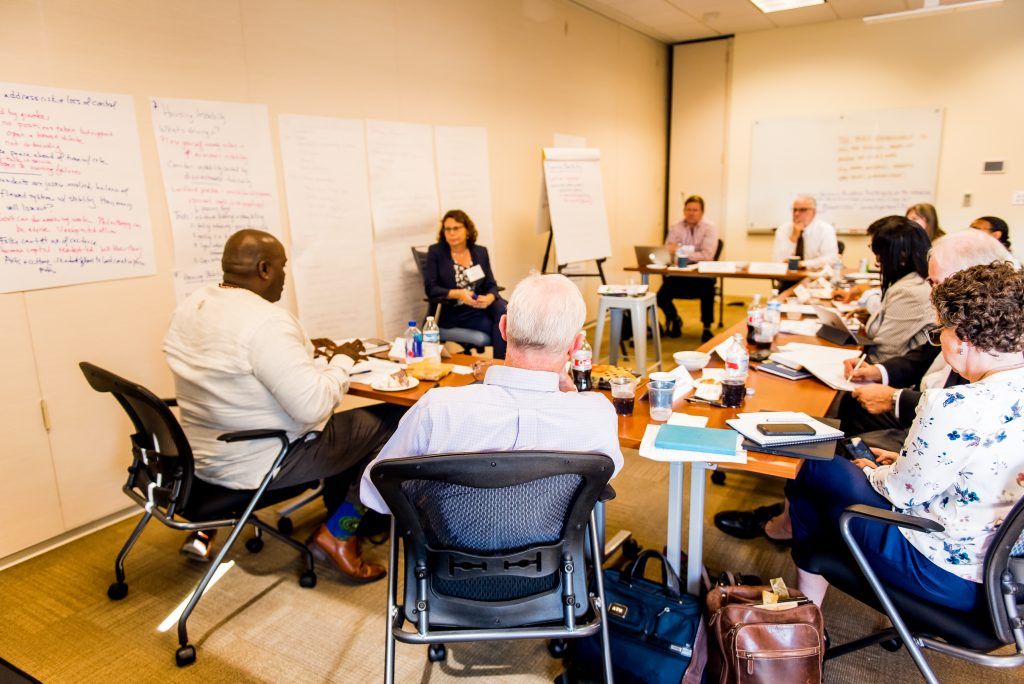
"It was so compelling listening to Deborah talk about this information,” Davenport remembers. “VHCF had some state funding, but when we were told about the waiting list for the mental health practitioners, that's what really struck us. We have people who want to be in this field, but there's this roadblock that's contributing to the problem."
Eric Clay, the Community Foundation’s Vice President of Community Impact, serves as the staff lead for the Jenkins Foundation’s work. He remembers the Boost! initiative quickly received support from the different foundations in attendance.
“Many of the funders were interested and decided this was something they wanted to support,” Clay recalls.
The fact that VHCF had the data, research, potential roadblocks identified, an active pilot already running, and the trust of the wider community made it an even easier proposition for the funders to endorse.
Nadine Marsh-Carter is the President and CEO of the Cameron Foundation and also sits on the board of the Jenkins Foundation. Prior to that January meeting, the Cameron Foundation had already made the decision to help fund Boost! and was thrilled to see the pilot gain additional support.
“Demand has been growing for mental health services, and the need for professionals is increasing,” Marsh-Carter said. “Especially now, when funding from other sources may be less certain and with additional stressors, this program aligns with so many community needs. Supporting Boost! was a no brainer.”
It all came together surprisingly fast, with the funders eager to commit to funding the program.
“This was a great example of not always having to go back to square one,” Davenport remarked. “When we’ve found a situation where we could move forward without having to go back and start discussions all over again, that’s a great opportunity.”
The approach quickly emerged: the different foundations, including Jenkins, RMHF, the Cameron Foundation, the Community Foundation, and others, working directly with VHCF, would pool money together to support Boost! and directly shorten the waiting list for mental health practitioners.
In total, the funders collectively contributed over $100,000 to support the Boost! Program. This made it possible for 13 pre-licensed therapists to come off the waitlist and accelerate their path toward becoming licensed mental health practitioners, ready to serve the greater Richmond area.
That was in 2024. Now, a year later, this collaborative process established between funders continues to inform and impact how these regional foundations work together.
Thanks to the ongoing meetings of the RVA Health and Racial/Ethnic Equity Funders Group, the organizations know more about each other’s work and are better able to address shared concerns and pursue mission-aligned solutions.
"There's a better understanding of the challenges people are facing, and it's a much more efficient use of time,” Davenport offered. “There’s more transparency and more collaborative conversations about how we address the health needs of our community."
Gordon, meanwhile, emphasized how this accomplishment set the partner organizations up for future, collaborative success.
“This process changed the working relationship between funders,” Gordon said. “This gives us a proven example of the benefit of leveraging our dollars to have a greater impact on people in need.”
Gordon also explained that the data collected from this program could then be taken to policymakers in an effort to pursue long-term solutions.
Clay, who continues to engage with other area funders through the RVA Health and Racial/Ethnic Equity Funders Group, summarized how essential this kind of collaboration is to the wider Richmond Region.
“Anytime foundations come together, we think it’s beneficial for everyone.”
The story doesn’t end here—see how Boost! moved from pilot to powerful results and continues to shape the future of mental health in Virginia.