Q&A with Victor Branch, Board Chair
Victor Branch is President of the Richmond Market for Bank of America and a proud champion of all things Richmond. Meeting Victor is like receiving a warm embrace from an old friend. He exudes positivity, authenticity, and a true passion for ensuring that our community and its residents have what they need to be successful. 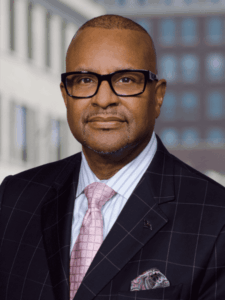
A current resident of Chesterfield County with his wife Michele, Victor grew up in Dinwiddie County, attended college at Richard Bland College and the College of William & Mary, and returned to the region when he began his career in banking. (He just celebrated his 40th bank anniversary last year!) He has also been a dedicated community servant, offering his wisdom and experience as a board member of numerous organizations like Virginia State University, Virginia Gateway Region and Housing Opportunities Made Equal. If anyone can appreciate the changes, challenges and opportunities that RVA has experienced over time, it is Victor.
In January, Victor took the helm as board chair of the Community Foundation and he will serve a two-year term. We recently spoke with him about what energizes him, what gives him hope, and what he sees as our next best opportunities for working together to build a “greater” Richmond that will benefit both current and future generations.
Q: What do you feel is the Community Foundation’s most important role?
A: We are the keepers of community impact. This means bringing people together to have a bigger impact on lifting our community and ensuring that everyone thrives. Richmond is a thriving and growing community, attracting new people with well-paying jobs and opportunities. However, not everyone benefits from this growth, especially low-income residents born in the region. The Community Foundation plays a central role in ensuring under-resourced and overlooked citizens and neighborhoods can share in this prosperity. By convening and collaborating with partners, we ensure all stakeholders can contribute.

Q: From your perspective, has philanthropy evolved over your time in Richmond?
A: Yes, absolutely. Philanthropy has become more professional and strategic. Twenty-five years ago, it was well-meaning individuals trying to do good, but without a cohesive strategy. Today, the mindset has shifted to be more data-driven and focused on collective impact. Community foundations now measure success not by the size of their assets but by the impact of their giving on critical community needs. This professionalization allows us to frame our achievements in terms of tangible outcomes, such as housing units created or our direct impact on the unhoused population.
Q: What about the Community Foundation’s recent work and its constant evolution makes you most proud?
A: I’m proud of how we’ve grown our assets and attracted a larger group of increasingly diverse donors by telling an emotional and impactful story. Our strategic approach to giving has brought more people to the table and aligned donors with the causes they care about. As a community catalyst, we’ve expanded partnerships beyond traditional donors and across sectors, working with partners to tackle big issues like housing and workforce development. Our reputation and credibility as a trusted, effective leader in the community have soared as a result. People seek us out because when they see that when we’re involved, the right things happen.
Q: Why is it important for the Community Foundation to continue to expand its donor base?
A: I believe it is important to welcome new donors, especially from underrepresented groups, whose expertise and experiences have too often been overlooked. These donors bring a critical perspective that has been missing from much of Richmond’s philanthropic efforts and allows us to be more responsive to community needs.
At the same time, we must always honor, engage, and celebrate our long-time supporters who helped us get to where we are today and whose philanthropy continues to support important organizations doing amazing work across the region.
By emphasizing our shared goals across our donor network, we can build trust and maintain strong relationships with existing donors while expanding our reach to new communities. This is not a zero-sum game; this approach helps everyone. By integrating donors and fostering collaboration, we can achieve long-term sustainability and greater collective impact. The potential is unlimited.
Q: What opportunities do you see for the Community Foundation moving forward?
A: We can continue to attract more donors and partners by demonstrating our proven impact. By lending our leadership to initiatives like RVA Rising, we are helping to create a sustainable framework for regional collaboration that brings together key public and private partners. While past efforts faced challenges, this time we’re creating a structure that prioritizes long-term goals and tangible outcomes that center around the belief that everyone deserves the opportunity to thrive. We are working together to help everyone in our region - regardless of race, ethnicity or zip code - achieve upward economic mobility.
Our strategic plan ensures we are focusing on areas that will have the most significant impact on the lives of individuals and families, such as housing, workforce development, education, transportation, and health. The long-term vision of this approach is to create a self-sustaining ecosystem of community support. By aligning our resources, partnerships, and efforts, we aim to address systemic issues, lift under-resourced populations, and build a thriving region for generations to come.
Q: Who or what inspires you as a leader?
A: Mentorship. I come from the kind of community that the Community Foundation and our partners and donors would help support. Education was my passport out of poverty; it was a game changer. I know what a good education can do to get you where you want to be, and I feel so fortunate that I have had such great mentors that helped me get to where I am today.
Q: What does philanthropy personally mean to you?
A: It’s at the core of being a kind, giving, generous person. And I’ve always been drawn towards fighting for the voiceless and the overlooked. I also believe that to whom much is given, much is required. None of us got to where we are, by ourselves, on our own. There has always been someone who has guided us and supported us to where we are. To me, everybody who helped build you up, you can’t pay them all, but you can pay it forward by helping someone else.