A Path to Black Homeownership: Amandla Fund for Economic and Racial Justice
The Amandla Fund for Economic and Racial Justice was established in 2020 by SisterFund and Ujima Legacy Fund, in partnership with the Community Foundation. The Fund creates a philanthropic pathway to strengthen economic mobility for Black families by addressing the racial wealth gap and advancing opportunities for homeownership in Richmond.
In its first initiative, the Fund partnered with Southside Community Development and Housing Corporation (SCDHC) to launch the Economic Mobility & Black Homeownership Program in 2024. This innovative program helps qualifying families cover down payments and closing costs and connects them with a Housing and Urban Development (HUD) housing counselor before, during, and after they close on their home.
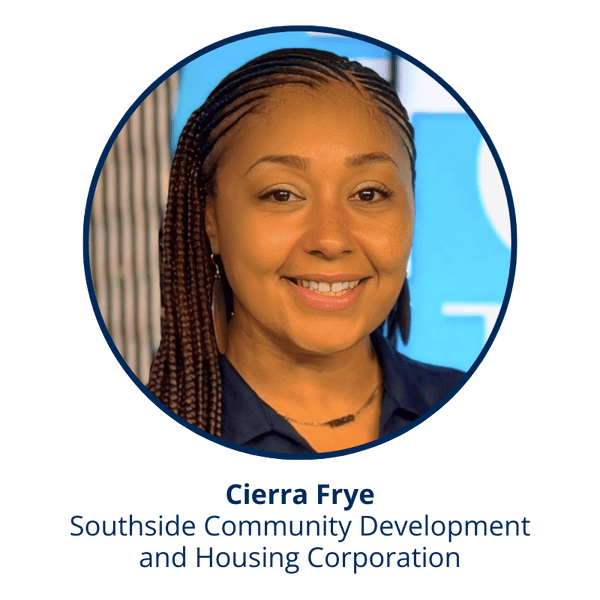
Cierra Frye, SCDHC’s Director of Homeownership Services and a HUD Certified Housing Counselor, explained that the specific residents who are served by this pilot sets it apart from other programs and may help explain its success.
“A lot of these families felt like they’d never have the chance to purchase a home or find homeowner assistance because they're considered to have too much income,” Frye said. “This grant program was targeted at those people.”
This “missing middle” encompasses Richmond Region residents who don’t have access to traditional assistance programs due to income requirements but who are also unable to compete in the traditional housing market.
According to Jovan Burton, the Executive Director at the Partnership for Housing Affordability and a member of the Amandla Fund Advisory Committee, the driver here isn’t on income, but on wealth development.
“The focus is around wealth creation,” Burton said, “and trying to redress the racial wealth gap for families who are homeownership ready. And we’ve seen that this approach accommodates so many more unique circumstances.”
The results speak volumes.
During the first year of the pilot, 10 families were provided with the resources, support, and guidance they needed to successfully purchase new homes that are move-in ready and do not require costly repairs. The second cohort is focused specifically on families, serving a total of 52 people. This includes 17 families who are first time homebuyers, with the majority of recipients being single parent households led by women.
One of these women shared how the pilot program has already impacted her family.
"Receiving funds from the Amandla Fund helped me to become a homeowner and provide both comfort and legacy for my family,” she said. “As a single mom of two, this support was essential in my journey to homeownership. My family is so grateful for this opportunity."
Another participant in the program echoed this same sentiment.
“I am so grateful,” she said. “My family and I are enjoying our new home one day at a time, hopefully for our lifetime.”
You can read about another family’s story who were able to purchase a home through this program in SCDHC’s Summer 2025 Community Newsletter.

"These families don't have a true resource to lean on because they're often the first in their family to go through this,” Frye said. “But when we see these families securing homeownership, It shows that they are creating generational wealth.” This emphasis on generational wealth and equity was what first attracted Burton to this program.
“If we want to reduce racial disparities,” Burton said, “the best way to do that is through home ownership, which is essential to building generational wealth.”
According to Frye, a mere six months into the grant period, all of the families taking part in the pilot already have an idea of the home they want or are under contract. So what comes next?
The Amandla Fund, SCDHC, and the Community Foundation are tracking the progress of new homeowners for five years after they buy their homes. This will help us see what kinds of support really make a difference, what barriers people still face, how those barriers can be addressed, and whether this approach could work on a larger scale.
Yet even now, Burton knows that the pilot’s ongoing results are proof that progress is possible. 
“We’ve had success across the board,” he said. “Now we need to look at the kind of potential that exists in our region, and we’ve already seen opportunities for greater collaboration. While racial equity work is never easy, we can do our part to model what it looks like to be intentional about parity in home ownership that helps achieve economic mobility.”
The Community Foundation is proud to partner with the Amandla Fund and are honored to use this Black Philanthropy Month to celebrate the transformative impact they continue to have on the Richmond community.